
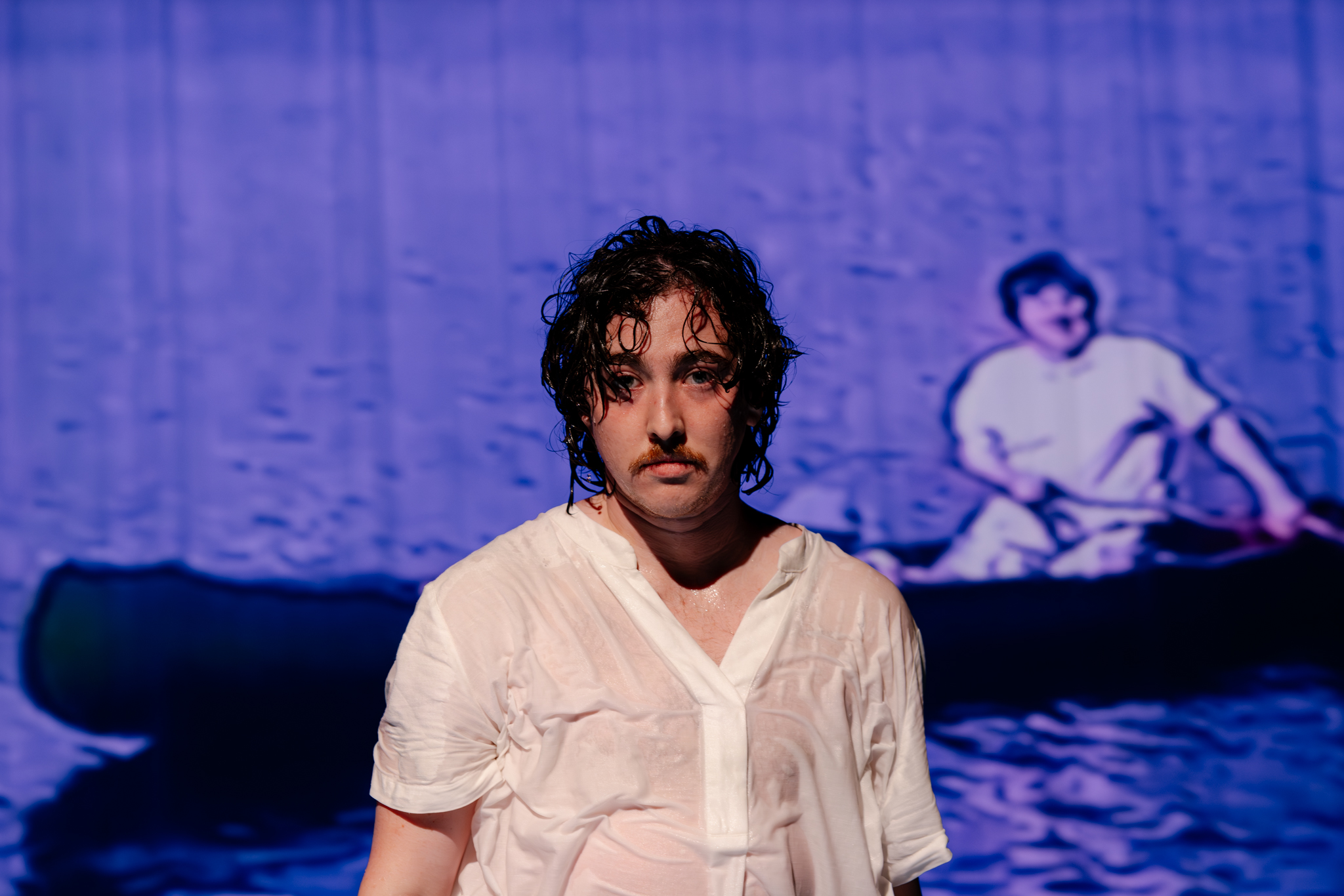
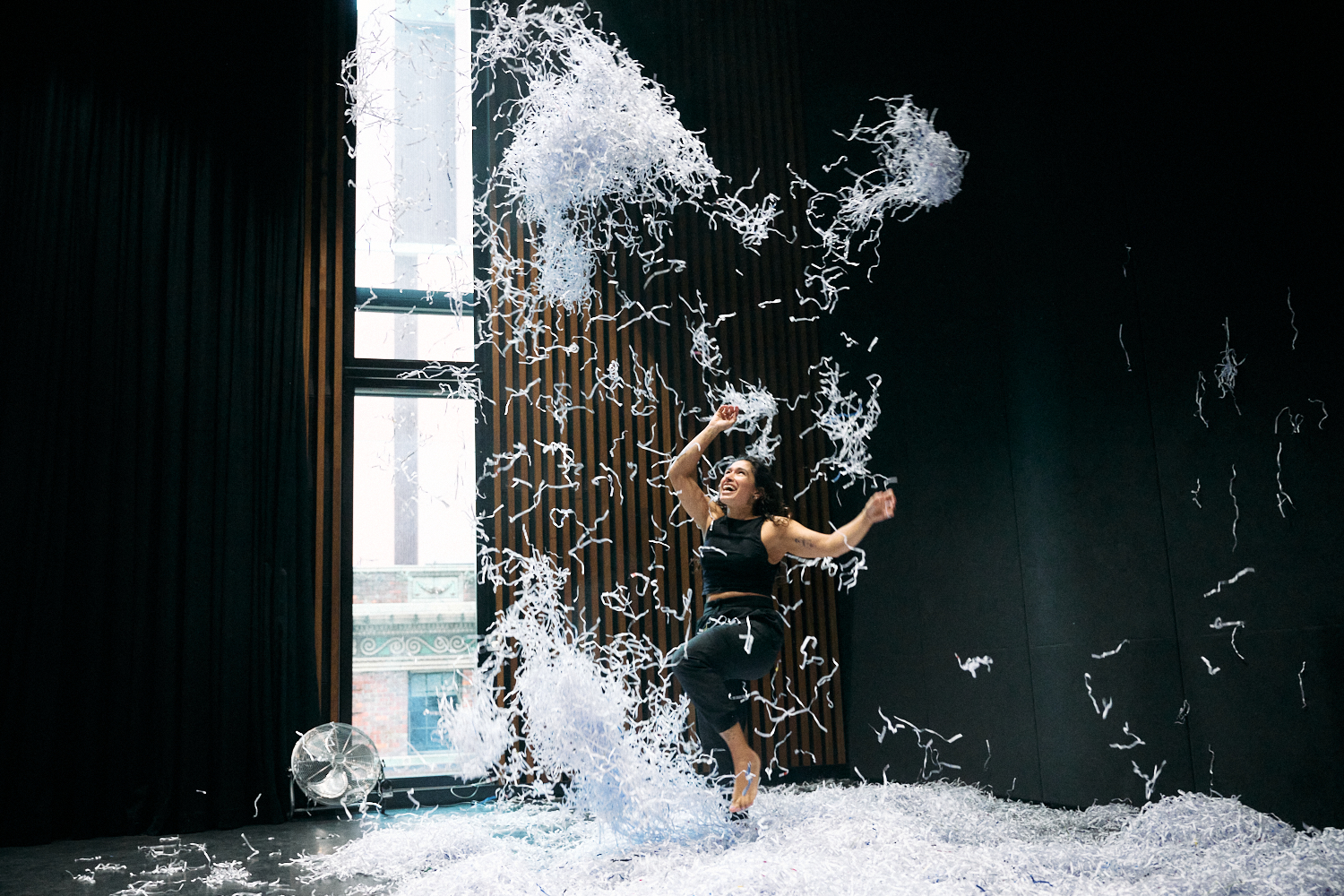
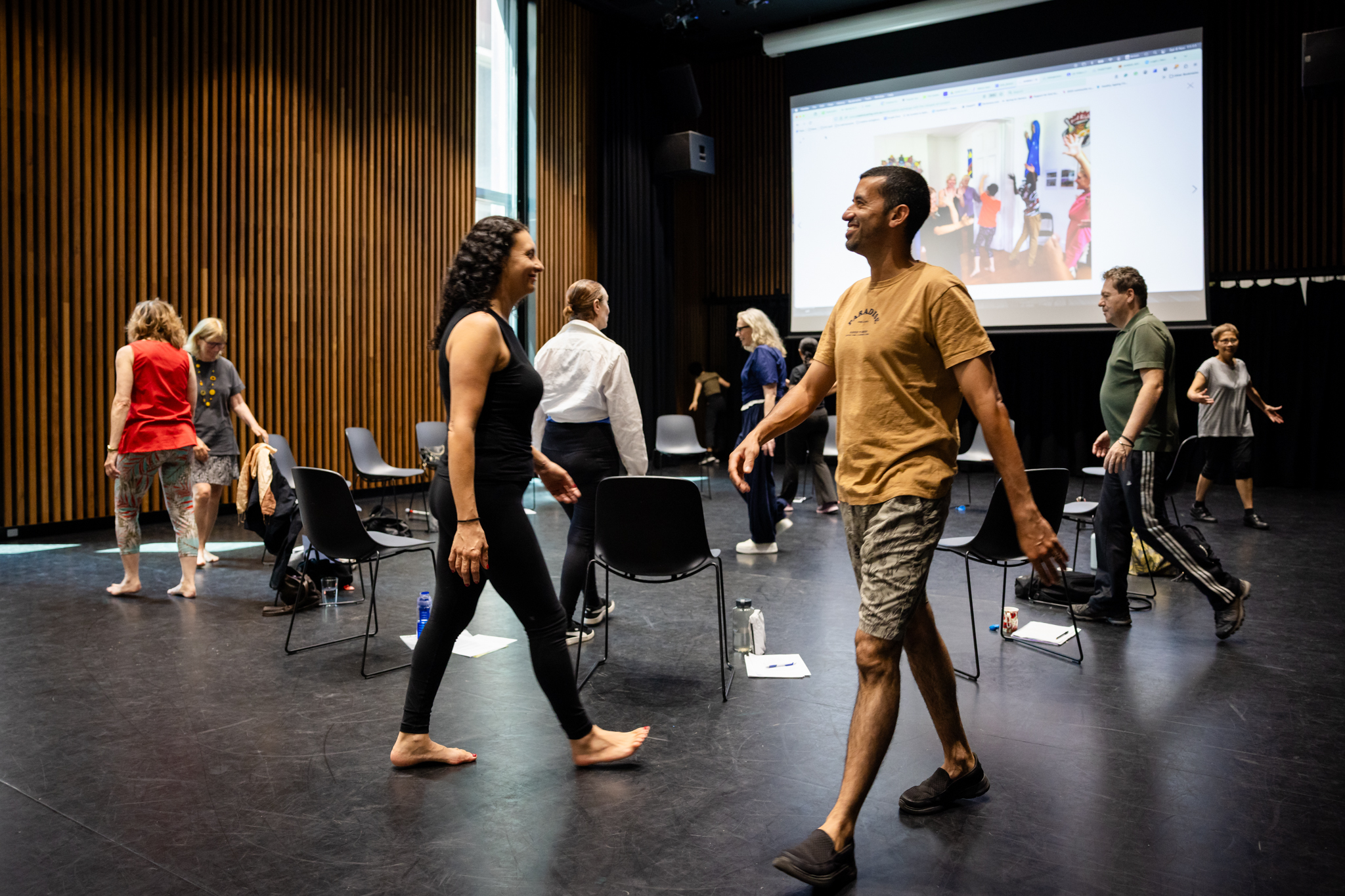
Flowtality's Break the 5th Wall for the Live Arts Residency. Photography by Seiya Taguchi.
Brand X
Disability Influence, Access and the Future of Creative Spaces.
Brand X is a Sydney-based multi-arts organisation creating space for artists to experiment, collaborate and develop new work across disciplines including performance, visual arts, music and digital practice. Founded in 2005 through a grassroots response to the loss of affordable creative space, the organisation has since transformed underutilised buildings into artist-led cultural infrastructure. Through disability-led initiatives such as Ground Zero, which emerged from their commitment to embedding access into every part of their work, Brand X is leading the way in accessible cultural participation.
ADNA’s National Director Sarah-Mace Dennis sat down with Brand X’s Accessibility Coordinator Dean Nash and Co-Founder and Director James Winter to find out about how their commitment to access and inclusion has allowed them to rethink every part of the organisation from different perspectives.
Who are the artists that Brand X works with and what kind of support do you provide?
James Winter: Support comes in the form of number one, an artist-led philosophy. When you come through any one of our doors, you are met by people who are from the arts who can immediately understand what you’re trying to do and offer support. Then there’s the support where we offer programs — so funding for people to realise ideas or to test those ideas in front of an audience. Then we offer support through our access and inclusion advisory panel. This gives us the ability to rethink absolutely every single part of the organisation from different perspectives, so we can then offer multiple ways in which artists can apply for programs, can use our facilities, or engage with us as an organisation.
Dean Nash: In terms of access and working with disabled artists, one of the great things about coming on board here was that for the first 12 months in the role there wasn’t a specific job description for me. The idea was that I would float and watch and observe and work across the different departments. Through the 12 months of observation, I discovered that they were already doing so much that would be considered access — just through the fact that it was so artist focused and always from a position of care first. At the end of the 12 months, I wrote up a document that was originally supposed to be a one-page info doc about access through these programs, which is not what it ended up being! It ended up being a paper that I called the Intentional Cultivation of Care, which is this sort of flexible, malleable framework for access, for care, and for inclusive practices. But this was already embedded in the culture before I came on board. I just got to observe it and bring it into context.
How has Ground Zero, Brand X’s disability-led residency and performance program, influenced how your organisation thinks about culture and access?
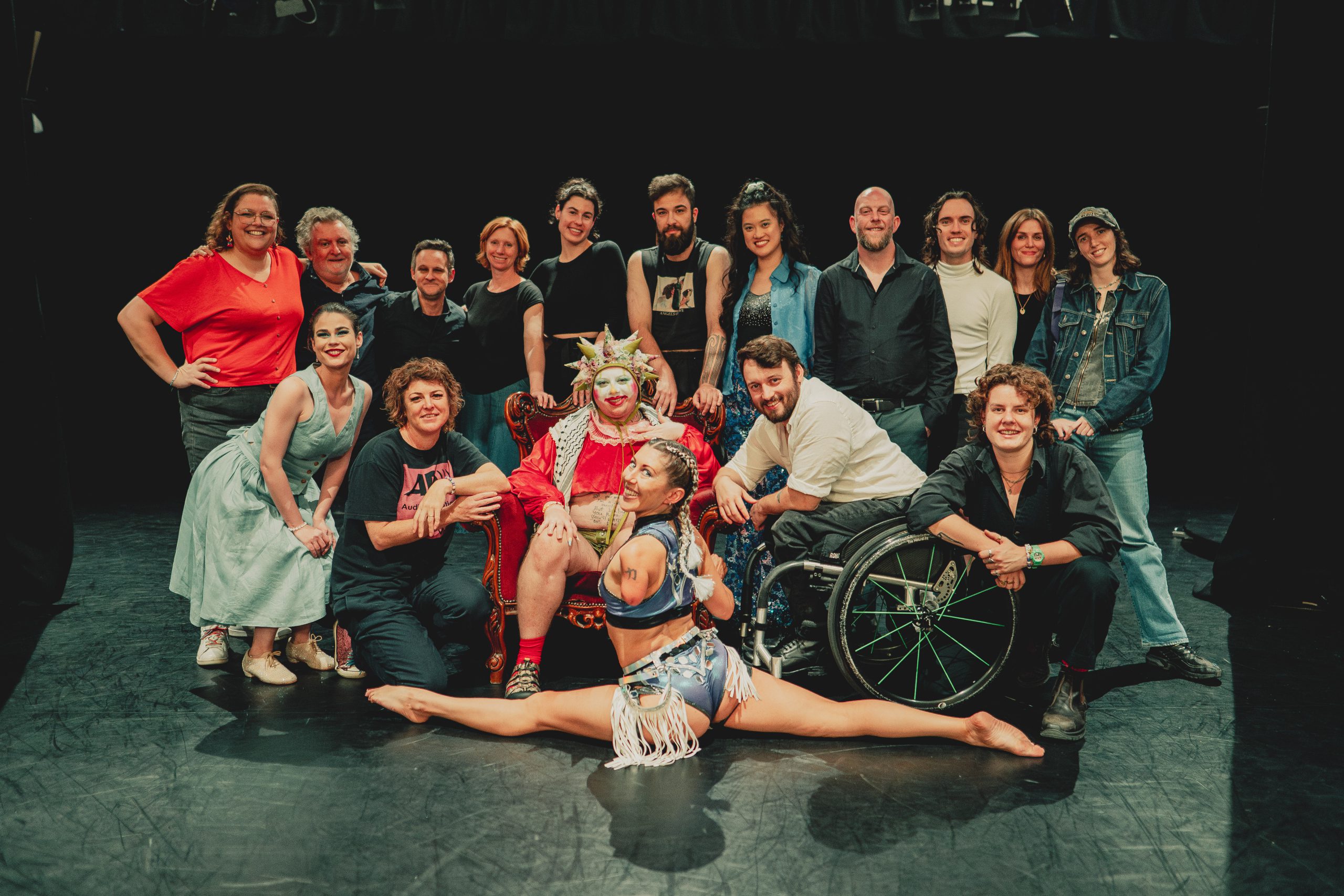
Dean Nash: Ground Zero is a disability-led residency and performing arts season, specifically for artists who identify as disabled, d/Deaf, or neurodivergent. We offer space, time, funding and an access bursary for artists to come into the space and create a 15-to-20-minute work. And then there’s a cabaret style performance season at the end of that. The reason I’m really proud of Ground Zero, was that building this structural framework of access was an absolute requirement for the program. We used it as an incubator for accessible design and best practices for access that could then become organization wide.
How has your ongoing commitment to access impacted the communities you work with?
James Winter: All this work in access has really revolutionised the way in which we think about space and people and ideas. We are lucky enough to be building from scratch a new live music venue in Marrickville, and from Dean’s influence we are baking in access from the absolute beginning and then working from there. That means regardless of how inconvenient it could be, that’s what we do — the first thing a stage, the second thing an audience, the third thing the traveling of audiences through space. Regardless of whether you need that infrastructure or not, every single person will use it. Every time we think about what is the new culture, voice and artist that is going to be on the stage because they can, that excites me the most. In three, four years’ time, we’re going to be hosting disabled artists in a live music venue, and giving them the opportunity to be able to give us a new form of culture. Now that is pretty cool.
Dean Nash: We have an access bursary for most, if not all, of the programs. So a bursary of funding for disabled artists, and a bursary of funding that any artist can use to make the shows that they are creating here more accessible to an audience. For the bursary for disabled artists, a lot of the time I was having conversations with artists who were like: I don’t know how to use that, I don’t know what I would use that for. And that would be a conversation of, let’s talk through an ordinary day of coming into the space to create or coming to the space to perform. And they would sort of discover these things that we could help with, that they weren’t identifying as access barriers, because they were already mitigating them themselves. But in removing them, it was making the experience more equitable.
How can the arts sector become more accessible?
Dean Nash: I think consultation, and then beyond consultation, disability leadership at all levels of organizations. I think that’s kind of where the conversation has gotten to. I think there are a multitude of small things that you can do. Like we could talk making sure there are accessible shows throughout your slates and making sure that you have consultancy from people with disabilities in art bodies at your venues. Those are great, but I think the conversation is moving beyond that at this point, and the way to make real change is disability leadership throughout organizations.





 Subscribe



